Traps and Wastes
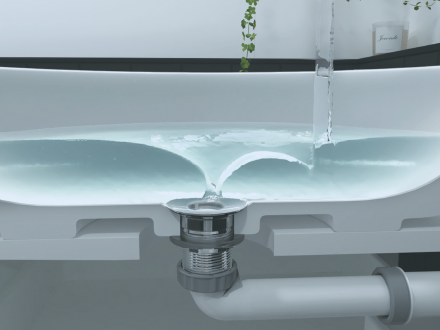
The drain is a key component of any sanitary appliance. It ensures the proper flow of wastewater from the bathroom, kitchen, or toilet to the plumbing system and sewer line.
In other words, the drain is a sanitary fitting that connects to furniture or appliances to evacuate wastewater, while also helping to prevent unpleasant odors from rising into the room.
Valentin is a French manufacturer specializing in drainage systems since 1944.
When purchasing a sink, the drain is usually supplied with it. However, it may need to be replaced over time due to wear or improper use (e.g., harsh chemical cleaning). In that case, it’s important to choose a product that matches the diameter of the hole, the screw length, and the shape of the overflow (round or square). You must also consider the number of bowls (typically one or two).
The drain is more than just a technical part — it is used daily. To avoid frequent disassembly of the trap due to food debris or dirt, you can opt for innovative systems that allow easy removal of debris without tools. For example, Valentin’s Siphonette simplifies the cleaning of both the basket and the trap.
Kitchen drains may also feature a connection for a dishwasher or washing machine.
Brass or Plastic?
The choice depends on your budget. Plastic is more economical, while brass is more durable and gives a more premium feel.
In the Laundry Room
Drains are usually simpler and made of plastic. You can also install a floor drain in this area to allow for easy cleaning with large amounts of water — a less common option today, but still highly effective.
For the Shower
The visible part of the shower drain is the cover, also known as the mushroom cap. The choice is often made based on the look of the waste outlet. Some shower trays include the waste when purchased.
Shower waste designs vary: round, square, daisy-style, black, chrome-plated, white and gold.
Trendy extra-flat shower trays require ultra-slim drains that save space beneath. Valentin’s Minime (5717) model is ideal for this application.
The direction of the outlet (horizontal or vertical) is another important factor. Valentin’s La Goulue (5776) is a versatile model with an adjustable outlet to suit any piping configuration.
Before choosing a shower drain, consider:
- Design and style
- Thickness of the shower tray
- Outlet direction (horizontal or vertical)
- Hole diameter (typically 90 mm but also 60 or 50 mm)
For walk-in or level-access showers, a channel drain may be required, and the right product should be chosen accordingly.
For washbasins or bowls
If the basin includes an overflow, various types of drains are available: free-flow, click-clack, chain plug, or pull-rod systems.
If the basin does not have an overflow, it is strongly recommended to choose a free-flow drain to prevent overflow risks. Blocking the drain and leaving the tap running can easily cause flooding, and such damage is typically not covered by insurance. Therefore, we advise in that case to install a floor gully.
Two washbasin wastes stand out for their versatility:
- Cut & Click by Valentin, which adapts to all basin thicknesses
- Digiclic (1236) by Valentin, a universal click-clack waste that adjusts to any fitting depth
For Greater Accessibility
In cases such as PRM (Persons with Reduced Mobility) installations, space-saving traps are ideal. Valentin’s Connectic (6112) is a great example of a compact, offset trap solution.
User convenience is increasingly important. Many consumers now prefer free-flow waste systems.
Materials
Brass is robust and long-lasting, while plastic offers good value for money.
Bath Traps
For bathtubs, drainage performance is essential — this means high flow rates per minute. Another critical feature is odor control. While it’s relatively easy to replace equipment under a basin or bathtub, replacing a shower drain after installation is far more difficult. So, making the right choice from the start is essential.